
Ready to Buy a Home Inverter? Find the Right One for Your Needs
October 23 2026
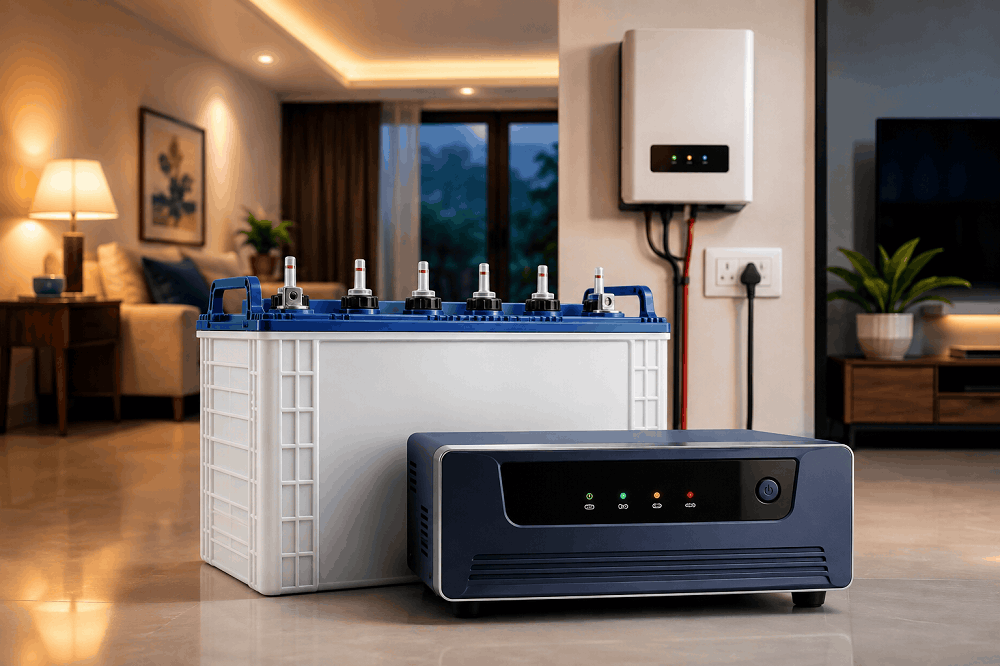
Power cuts have a talent for showing up at the worst possible moment. You’re in the middle of a work call, the pressure cooker is on, or the kids are half-ready for bed, and then everything goes dark. A home inverter keeps your essentials running until the electricity comes back. But picking one isn’t just about going with a famous brand. Before you buy inverter online, think about three things: which appliances you need to run, how long you want the backup to last, and which battery will suit the system. UPSBhai offers home inverters from brands like Exide, Luminous, Okaya, Microtek and Tata Green, so you have a few options to compare.
1. Work Out How Much Power Your Home Needs
Begin by listing what you actually want running during a power cut. For most homes, that’s a couple of fans, some lights, the Wi-Fi router and maybe a television. Some households also need a computer or a few extra appliances covered.
Note the wattage of each appliance and add them up. That total is the load your inverter has to handle. Don’t pick a model that will be running at its limit the moment a few appliances are on together. Leave yourself some headroom.
Remember that some appliances draw extra power when they start up, so the inverter must be able to handle starting loads as well as normal running loads.
Inverter capacity is usually given in volt-amperes (VA), and VA is not quite the same as watts, so don’t compare the two numbers directly. Look at the manufacturer’s rated output, and ask for advice if you’re not sure what capacity your load needs.
2. Decide How Much Backup Time You Need
Capacity and backup time are two separate things. The inverter decides how much load can be supported, while the battery mostly decides how long that load keeps running.
If outages are short and you only need lights, fans and the router, your needs are fairly modest. Longer power cuts or a heavier load will call for a different setup.
Battery capacity, usually measured in ampere-hours (Ah), is one factor in backup time. The real duration also depends on the connected load, the condition of the battery, the inverter’s efficiency and other operating conditions. A seller’s backup estimate is a helpful starting point, but find out what conditions it’s based on before you rely on it.
3. Choose the Right Inverter and Battery Combination
The inverter and battery have to be a good match. Check the battery voltage the inverter supports and the battery type the manufacturer recommends, whether you’re buying a combo or purchasing each separately.
You’ll come across flat-plate, tubular and lithium batteries. They differ in cost, upkeep and how they behave. Tubular batteries are a popular choice for home backup, while lithium may appeal to people who want a different kind of battery technology. What’s right for you depends on your budget, how you’ll use it and whether the inverter supports it.
Think about where everything will sit, too. The inverter and battery need a ventilated spot, away from moisture and heat. Follow the manufacturer’s installation and safety instructions.
4. Compare Inverter Price Beyond the First Listing
The inverter price changes with capacity, waveform, features, brand and warranty. A basic model costs less upfront, while a higher-capacity unit or one with extra features will cost more.
Compare products with similar specs instead of going by price alone. Check whether the listing is for the inverter only or includes a battery. If you need both, add up the combined cost before you decide.
Warranty matters here as well. See how long it lasts, what it covers and whether you need to register. A low price isn’t a bargain if the capacity is wrong for your home or the backup doesn’t meet your needs.
5. Check the Waveform and Features
Home inverters come with different output waveforms, mainly sine wave and square wave. Pure sine wave models are often preferred for modern electronics and appliances that need smoother power. Still, the right choice depends on what you’ll be connecting and what the manufacturer advises.
Read the specs for overload protection, short-circuit protection, battery charging features and anything else you need. Two inverters with the same VA rating won’t necessarily offer the same features, so don’t assume they do.
6. Consider Delivery, Installation and After-Sales Support
Buying online makes comparing products easy from your couch, but the installation still needs care. The inverter has to be connected correctly to the right circuits, and the battery terminals and wiring must be handled safely. Getting a qualified technician is the sensible route, especially if new wiring or changes to your existing setup are involved.
Before you order, check whether delivery covers your area, what installation costs and whether service is available near you. UPSBhai makes it simple to buy an inverter online, with home inverter and UPS options listed alongside installation in the locations it serves. Its site lists several brands, so you can compare models and specifications in one place before you commit.
A Quick Checklist Before You Order
Run through these points before paying:
- Total wattage of the appliances you want to run
- Inverter capacity and supported battery voltage
- Battery capacity and expected backup time
- Battery type and compatibility
- Total cost of the inverter, battery, delivery and installation
- Warranty terms and registration requirements
- Delivery and service availability at your address
Find a Home Inverter That Fits Your Needs
The right inverter is the one that covers your household’s power needs without making you spend more than necessary. Work out your appliance load first, decide how much backup you want, and then compare compatible systems and their warranty terms.
UPSBhai lets you browse home inverters from established brands and compare specifications before you buy. Take a little time to go through the details, including the final inverter price, so that what you choose genuinely suits your home and isn’t just the cheapest listing.
Frequently Asked Questions (FAQs)
How do I choose an inverter for my home?
List the appliances you want to run, calculate their combined wattage and select an inverter with sufficient rated capacity. Then choose a compatible battery based on your required backup time.
What affects inverter price?
Capacity, brand, waveform, features and warranty can all affect the price. The total cost also depends on whether a battery, delivery or installation is included.
Can I buy a home inverter online?
Yes. Check the product specifications, warranty, seller details and delivery or installation availability before ordering. Make sure the inverter suits your appliance load.
Which battery is suitable for a home inverter?
The suitable battery depends on the inverter's voltage and compatibility requirements, your backup needs, budget and preferred battery technology. Follow the inverter manufacturer's recommendations.
How long will a home inverter provide backup?
Backup time depends on battery capacity, appliance load, battery condition and inverter efficiency. Running fewer appliances generally allows the available battery energy to last longer.
Does UPSBhai sell home inverters from different brands?
Yes. UPSBhai lists home inverter and UPS products from brands including Exide, Luminous, Okaya, Microtek and Tata Green. Product availability and specifications may vary.